TL;DR
- A dental bridge uses neighboring teeth as anchors and replaces only the crown of the missing tooth and does not need surgery.
- A dental implant restores a missing tooth at the root level with a titanium post, preserving jawbone and functioning independently of surrounding teeth.
- Implants can last over 20 years, while bridges may need to be replaced after 10–15 years and require careful flossing technique.
- The right choice for you depends on your bone health, the condition of your neighboring teeth, your timeline, and how your dentist evaluates your individual case.
Which Is Better for a Missing Tooth: A Bridge or an Implant?
Both are proven tooth replacement options, but they work very differently, and the better choice depends on your specific situation, not a universal rule. When a patient at Rivers Bend Family Dental comes in asking about a missing tooth, the conversation starts with what’s happening below the gumline, not just what’s visible in the mirror. The dental bridge vs. implant decision depends on factors such as jawbone health, the condition of adjacent teeth, and how quickly you need a solution.
What Is a Dental Bridge?
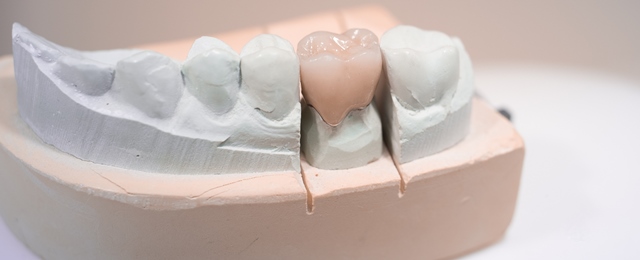
A dental bridge closes the space left behind by a missing tooth using the natural teeth on either side as anchors (called abutment teeth). Those neighboring teeth are fitted with crowns, and a false tooth (called a pontic) sits between them to fill the space.
The procedure requires two appointments and no surgery. At the first visit, the dentist reshapes the abutment teeth by removing a layer of enamel so the crowns fit properly. A temporary bridge goes in while the lab fabricates the permanent one. The second visit seats the final restoration.
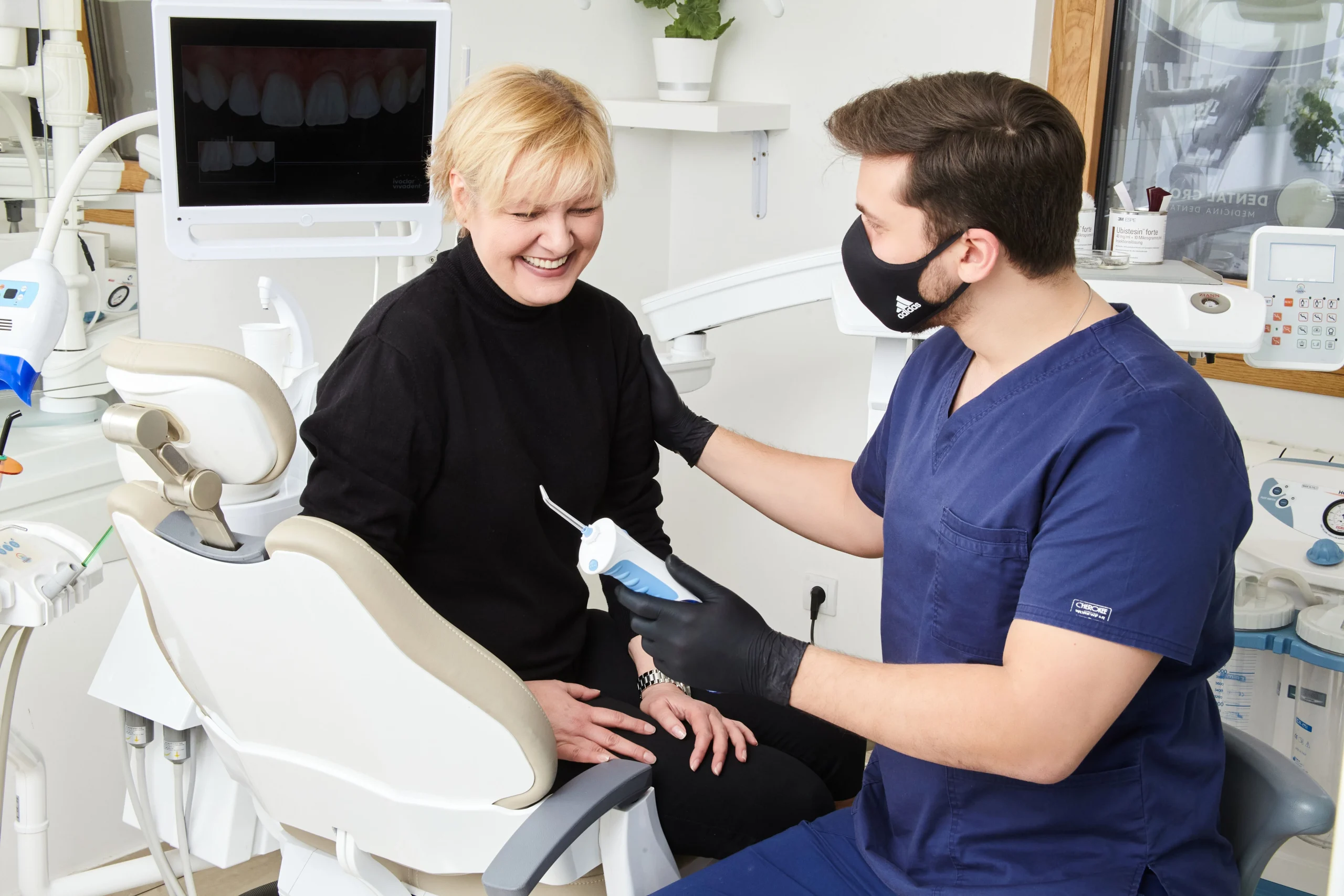
The trade-off is that two otherwise healthy teeth are permanently altered to support a third. If either abutment tooth develops decay or gum disease down the line, the entire bridge is at risk. Flossing also requires a threader or water flosser to clean beneath the pontic. Patients who skip this step frequently develop cavities at the base of the supporting teeth.
What Is a Dental Implant?
Dental implants rebuild a missing tooth from its root. The dentist places a titanium post into the jawbone, where it bonds with the surrounding bone over a healing period of roughly three to four months. Once integrated, an abutment is attached to the post, and a crown is placed on top.
The result looks and functions like a natural tooth. You can floss and eat with it normally, and never remove it. The implant stimulates the jawbone as a natural root would, which prevents the bone loss that typically begins immediately after a tooth is extracted. Adequate bone volume is the number one factor for successful implant integration. Patients who have waited years after losing a tooth may need a bone graft before placement can proceed.
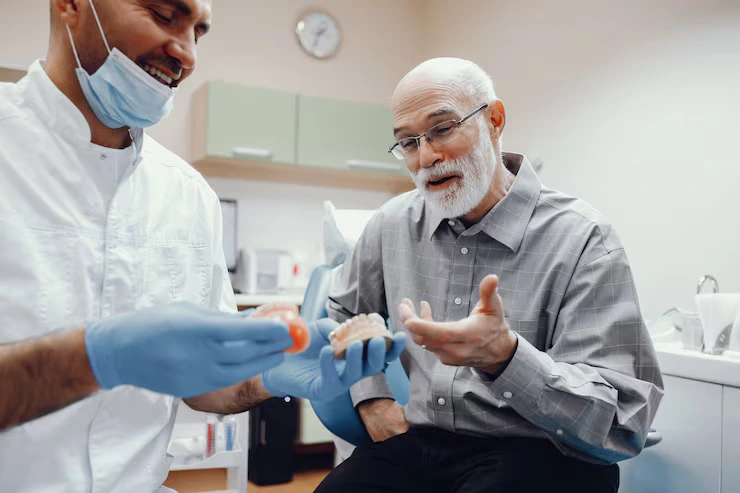
Dr. Ryan Lembke, DDS, who handles implant restoration and placement at Rivers Bend Family Dental, routinely uses a Cone Beam CT (CBCT) scan to evaluate the jawbone in three dimensions before any implant procedure. This imaging removes the guesswork and allows for more precise surgical planning.
Every patient may not be immediately eligible. Individuals with uncontrolled diabetes, active gum disease, or insufficient bone density should discuss these factors during consultation, as they can delay or complicate implant placement.
Dental Bridge vs. Implant: How Do They Compare?
When patients consider dental implants vs. dental bridges, the comparison usually comes down to these areas.
| Factor | Dental Bridge | Dental Implant |
| How it works | Uses crowns on neighboring teeth to support an artificial tooth (pontic) | Replaces the missing tooth root with a titanium post and supports a crown |
| Procedure | Non-surgical | Requires surgical placement of an implant post |
| Treatment timeline | Usually completed within 2–3 weeks | Typically takes several months, including healing time |
| Longevity | Often lasts 10–15 years with proper care | Often lasts 20+ years and may last a lifetime |
| Jawbone health | Does not prevent bone loss in the missing tooth area | Helps preserve jawbone by stimulating it like a natural tooth root |
| Impact on adjacent teeth | Requires reshaping neighboring teeth | Leaves neighboring teeth untouched |
| Daily maintenance | Requires special cleaning beneath the pontic | Brushed and flossed much like a natural tooth |
| Ideal candidate | Patients who want a faster solution, are not good surgical candidates, have significant bone loss, or already need crowns on adjacent teeth | Patients with adequate bone, healthy neighboring teeth, and a desire for a long-term tooth replacement |
| Upfront cost | Typically lower | Typically higher |
| Long-term value | May require replacement over time | Often offers greater long-term durability and bone preservation |
While several factors matter, jawbone preservation and the condition of neighboring teeth are often the biggest considerations when deciding between a dental bridge and an implant.
Which Option Is Right for You?
There is no single answer to which is better: dental bridge or implant. The right choice depends on the patient in the chair.
A bridge may make more sense if:
- You already need crowns on the neighboring teeth
- If your bone has deteriorated significantly
- If your health history makes surgery a higher-risk undertaking
An implant tends to be the stronger long-term choice for patients with:
- Adequate bone
- Healthy adjacent teeth
- The time to complete the process
Missing tooth replacement decisions at Rivers Bend Family Dental always include a full exam, digital X-rays, and a direct conversation about your options without pressure in either direction. The goal is to make sure every patient understands what each path involves before they decide.
Conclusion
When comparing a dental bridge vs. implant, neither option is universally better. A bridge can be an effective solution when treatment speed, existing dental work, or surgical considerations are priorities. An implant generally offers greater long-term durability, preserves jawbone health, and allows adjacent teeth to remain untouched.
If you are weighing your options, the clearest next step is a consultation where your jawbone, neighboring teeth, and overall health can be evaluated directly. Rivers Bend Family Dental offers dental implants in Ramsey along with bridge restorations. The team will walk you through both options with the imaging and clinical detail needed to make a confident decision.
Address: 14061 St Francis Blvd NW, Ramsey, MN 55303
Phone: 763-576-1855
Hours: Mon 7 am–4 pm | Tue 12 pm–7 pm | Wed–Thu 7 am–4 pm | Fri 7 am–1 pm
FAQs
The treatment is performed under local anesthesia, so most patients report feeling pressure rather than pain during placement. Some soreness and swelling in the days following surgery is normal. Over-the-counter pain relief is usually sufficient for recovery.
Both are made to match the color and shape of your existing teeth. Porcelain crowns used in bridges and the crowns placed over implants are custom-fabricated and blend with your smile. Over time, a bridge may show more visible wear at the margins if the underlying teeth shift or the gumline recedes.
The surrounding teeth tend to shift into the open space over time without a replacement. The opposing tooth can over-erupt, and the jawbone at the site gradually shrinks. These changes can complicate future restorations and affect your bite.
Bone grafting is not always needed before an implant. Patients who move quickly after a tooth extraction often retain enough bone for direct implant placement. A CBCT scan determines exactly how much bone is present and whether grafting is needed before proceeding.